
Metabolic Healing, Weight Loss, and Sustainable Wellness for High Achieving Women Who Don't Have Time to Burn Out - with Kathryn Becker







In this episode, Leanna talks with functional wellness practitioner Kathryn Becker, whose story will feel familiar to high-achieving women who keep pushing through exhaustion, stress, and mystery symptoms because life simply doesn’t slow down. Kathryn shares how she spent years performing at a high level while quietly battling insomnia, gut issues, hormonal chaos, and the pressure to “just keep going.” Her turning point came when she realized that willpower wasn’t the problem; her body was asking for a different kind of leadership. Her journey from burnout and frustration to clarity, strength, metabolic healing, and weight loss offers a powerful reframe for executive women who are craving change but don’t know where to start. This conversation is an invitation to rethink what wellbeing looks like for driven women and a reminder that transformation is possible without stepping away from your ambition.
Full transcript available here
Get lots of tips and tricks from Kathryn by following @beckerhealth on Instagram, and sign up for Kathryn’s Lean Energy program now! Enrollment opened December 3, 2025 and closes January 5, 2026.
Connect with Leanna here.
If you're ready for deeper transformation, check out The Executive Mom Reset; Leanna’s six-month coaching program designed to help ambitious moms stop merely surviving and start thriving. Book a consult now!
Leanna Laskey McGrath 0:04
Welcome to The Executive Coach for Moms Podcast where we support women who are attempting to find balance and joy while simultaneously leading people at work and at home. I'm your host, Leanna Laskey McGrath, former tech exec turned full time mom, recovering perfectionist and workaholic and certified executive coach.
Leanna Laskey McGrath 0:27
Hi everyone. Welcome back to the show. Thank you so much for joining me today. I'm so excited to introduce today's guest, Kathryn Becker. Let me tell you a little bit about her. Kathryn is a functional medicine practitioner, former engineer and mom of two, who helps women lose stubborn weight and get their energy back using root cause healing. After four years of helping hundreds of women one on one through her functional medicine practice, Kathryn realized she was still struggling with her own weight, despite doing everything right earlier this year, she finally cracked the code, losing 20 pounds in three months without cardio, calorie counting or medication, and keeping it off ever since she went on to package what she learned in her signature six week program, lean energy, which has already helped more than 300 women lose an average of 16 pounds and sustain it through functional hormone focused methods. Kathryn is passionate about helping women understand their bodies, rebuild their confidence, and discover that true fat loss starts with healing, not restriction. Welcome, Kathryn.
Kathryn Becker 1:32
Thank you.
Leanna Laskey McGrath 1:33
Thanks so much for being here. I would love to hear a little bit more about you in your own words, if we could just kind of get to know you a little bit more.
Kathryn Becker 1:42
Yeah. So from just a basic standpoint, I am a mom of two. My kids are both toddlers. I have such a unique path into this career field that I have now, same as you. I know, like we started in the corporate world and was climbing the ladder. Worked for like, a really intensive company that was, you know, rigorous and hard to get into. And then I got let go when I was actually eight months pregnant with my first kid during covid. And during those couple years when I was in that role. Before I got let go, I had just become fascinated with functional medicine. And my mom's always said that I have obsessions, right? And I'll go down these paths of obsessions. And now my son has that too, you know, latest Legos and ninjas. But at the time, I was really obsessed with functional medicine. I would listen to goop podcasts, which were kind of a thing at the time, and learned about this term that I had never heard of, and realized that I had intuitively been living that way for some time. And so when I learned that this was an actual field that people went into, I was fascinated. And so the second I got let go, I cried for a day or two, and then signed up for a training program. Same thing. I had always been really driven and thought, will people even take me seriously if I just have, you know, some certification behind my name that I've been trained rather than, you know, getting a MD or RN or nurse practitioner or job? But I just went all in. I had just had a baby, I trained myself in functional medicine and started working. And this year is really when I have exploded in my business, because I finally helped people lose weight, which is incredible, starting with myself. So I am really passionate about helping women feel the same way that I've felt this year, which is like you finally have complete control over your body and how it feels and how it looks, and it's okay to want better for yourself. And I am grateful that I've finally found a way to get women there, because I think a lot of times we tell ourselves, Well, this is just how I'm going to be, and I just need to accept it, and I need to have body positivity and maybe sit in sadness a little bit and move on. But when you actually have the tools and the pathway to get out of it, that's when your life can change.
Leanna Laskey McGrath 4:18
I love it, so let's go back, because I want to hear about, like, you started out as an engineer. Is that right?
Kathryn Becker 4:24
Yes, yeah. So my job is actually one of those really fun facts about myself, a great party table topic. I yeah, I studied mechanical engineering in school, and then I'm from South Texas, where the oil and gas industry is very prevalent, and so I started working right away for a giant Oil and Gas Corporation. And two weeks after starting, I was told that I was going to go be sent offshore to live on a rig with 200 men for two weeks. So, yeah, literally. Two weeks after I started my job, I flew in a helicopter two hours offshore and lived on what's called a drill ship. It's kind of like if you take a cruise ship and cut off two thirds of it and install a drilling rig on top, but you still have the 1/3 that's the living quarters. And I had my own little bunk room, and I would work 12 hour days, seven days a week for two weeks straight. And while I was on the ship, I was like collecting data and providing reports and being the only engineer on board as a, you know, 22 year old woman, also the only female on board. And then I would come back to shore and have two weeks completely off vacation. And then that changed, where I did that four or five times, and then ended up actually traveling to Guyana, which is a country on the northern shore of South America. It's technically a Caribbean country. It's a third world country, and we were drilling deep water exploration wells there. So I would live in Guyana for three weeks, working those 12 hours a day, seven days a week, for a couple rotations, and then I would also live offshore for three weeks at a time. So that's like a really fun fact about me.
Leanna Laskey McGrath 6:07
Yeah, I love hearing people's stories, because it's like, wow. So then you switched jobs, like you stayed with the company for a while, but in a different role where you weren't doing that.
Kathryn Becker 6:18
So my husband got a job offer in London, United Kingdom, for his company, and so I switched to the UK office for my company, and so was no longer rotating offshore or in the drilling department, and had more of an office based role. And here is where I was under. I feel so bad, because I talk about the all the time, but such an awful boss. She was literally the worst. And that's really where my health plummeted. And it's always so interesting to me when I work with women, because I know firsthand what stress alone can do to the body and to your health. So my health plummeted because I wasn't sleeping. I was so anxious, I was depressed. I didn't want to go into work. I basically just sat there all day and had nothing to do because there wasn't that much work to do in our team. But she would take it all to make herself look better, and I so I literally the jobs that she would give me would be to, like, organize our file structure. It really wore on me. And so during this time, I was interviewing for other jobs, trying to get out, and then finally got let go, which is probably to the surprise of no one.
Leanna Laskey McGrath 7:27
So you were in London when you got let go?
Kathryn Becker 7:30
Yep, so I was in London. I was eight months pregnant in the middle of covid, and at that time I had actually started working for a new boss who was in France and Hong Kong, and they were shocked. They said that this is so illegal. I can't believe they're doing this to you, but it was, in fact, illegal because I was a
Leanna Laskey McGrath 7:48
US employee. Then what? What did your process look like? You said you cried for a few days, and then, kind of like, did you start your certification at that point? And like, you knew this is what I want to do, and I'm just going to go all in on it.
Kathryn Becker 8:00
Yeah, I think it was because there was literally no option for me to get an engineering job. At that time, I was living abroad, and I was eight months pregnant. I was about to give birth to my first child. There was no way I was going to get a job. So it almost opened up that opportunity. Well, what the heck, why don't I just go into this line of work that I've been so interested and fascinated in and so I did my research. I reached out to people on Instagram that I saw who had done some of these certifications. The one that I ended up doing is called functional, Diagnostic Nutrition, and it was a beautiful blend of health coaching, which is, you know, the mindset work similar. I know you're in the coaching business, and you know how to help people to make healthier choices. But then it also had the lab aspect. So as an engineer, I was really intrigued by the data. And in the certification program, it taught us how to interpret and to read and to create protocols for gut testing, hormone testing, blood work, liver markers, all sorts of the whole gamut, food sensitivity testing. And so it took me. It was a self paced program that took me about six months to complete. I started complete. I started it a month after my son was born, and completed it when he was about seven or eight months old, and then started seeing clients one or two months later, after setting up my LLC, hiring a nanny so that I could take the calls and putting, you know, a website together, all those things.
Leanna Laskey McGrath 9:19
So that was in November of 2021 okay, and then at some point in there, you move back to Texas.
Kathryn Becker 9:25
Yes. So because I had lost my salary, which was our fun money, we decided to go ahead and move back to Texas, which we knew we wanted to do. Maybe we were planning on doing it a little bit later. So when my son was three months old, that was in April of 2021, we hopped on a flight with 20 bags and flew back to Texas. Our both of our families live in Texas, and Texas is where we're from.
Leanna Laskey McGrath 9:45
Yeah, well, I have so many questions. First, this is a totally selfish question, because this is something I've been really interested in lately, and so I'm assuming other people might be as well. You were talking about food sensitivity, and my best friend told me about this thing called. Biome, and it's like, you send in samples and then they test it to find out what foods you should eat more of and what foods you should eat less of avoid based on your unique gut biome. So I'm curious, is that something that you are familiar with, you've studied like, tell me more.
Kathryn Becker 10:18
I've not studied it. I've not been trained in it. I'm in the GI map stool test, which is by diagnostic solutions laboratory, okay, Zoomers and MRT, which are two different food sensitivity testing. But I know of the VIOME test, which comes back and tells you which of your beneficial bacteria are high which ones are low. And I've had clients come to me that have those tests that I'll help try and, you know, figure out what to do with it. Food sensitivity testing is so interesting to me because so many my one on one clients in the past come to me and that's what they want, right? They I feel like they've heard somewhere that they want to be told what they should eat and what they shouldn't eat. But it is so much deeper than that. We can go down this tangent. The way the gut works is that we have, a lot of us have what's called leaky gut, and that's where our intestines are supposed to be a PVC pipe. And when we eat food, the only thing that should be getting into the bloodstream are our nutrients through osmosis. And when we have leaky gut, which can be literally, everyone has it. It can be brought on by stress, by medications, by foods that you're sensitive to, that you're eating, that you don't know, inflammatory foods like gluten and dairy and sugar and grains and all of these things. So instead of having that PVC pipe, we actually have a colander. And when we have a colander, these food particles that are going through that pipe are leaking into our bloodstream, and that shouldn't happen. And so when they come into our bloodstream, our body almost sends an army out to say, You're a foreign invader, you shouldn't be here, and encapsulates it. And this causes these inflammatory compounds that then travel throughout our body. They can get stuck in our in our joints, because we have low airflow there, and that usually is where we see joint pain. They can travel to the brain and cause brain fog and other neural disorders there. And whenever you do a food sensitivity test, it tells you what foods are getting behind that barrier and getting into your bloodstream, that your body is having an IGA reaction to which is an inflammatory reaction. But if you remove those foods without getting to the root cause of why your gut is leaking in the first place, then your body will just form sensitivities to new foods, because those foods will be gone, but then you're getting new foods that come through the colander. So food sensitivity testing is very expensive, especially if you get a really high quality one. The one that I run on my clients is $600 a lot of dollars. A lot of the tests that I do run are more in the 200 to $300 range. So that is, you know, twice as much. But you have to be working on repairing the gut. There's something called a five hour protocol, which is, you know, remove, replace, re, inoculate, rebalance and restore. So removing the foods that are leading to this, to the leaky gut is really important. But then also rebalancing your microbiome, taking probiotics as needed, getting rid of anything that comes up in your stool, testing like parasites or fungal overgrowth or bacterial overgrowth, and then repairing the guts that it becomes that PVC pipe again. And then those foods that you're sensitive to, you shouldn't have reactions to them anymore because you have that PVC pipe. They're coming in your mouth and out your butt.
Leanna Laskey McGrath 13:23
So interesting. I think it's so fascinating because we know that stress, you know, impacts us in a negative way, and we have like different ways to deal with the effects, right? Like we have medicine that we can take. We know that exercise is helpful, but I think it's so fascinating to really get a better understanding of, like, how much food plays a big role in our overall health. And like, just like how we might feel on a day, or how our joints might feel on a certain day. Like I noticed whenever I eat white flour, like my hands are stiff. I think the way that our society generally wants to deal with that is to tell me to, like, take some Advil for anti inflammatory. And it's like, well, or I could just, like, not eat the white bread, right?
Kathryn Becker 14:11
Yes, and Tylenol has been proven to cause leaky gut, so you're opening up the colander even more when you're putting these, like, Band Aid approaches on top.
Leanna Laskey McGrath 14:20
So tell me more about your journey with wellness and you know, functional medicine, and it seems like you have been using yourself as like a test subject. What has your journey been like? Tell us more about that.
Kathryn Becker 14:35
So when I was going through my certification program, we had to run all the five labs that were trained on on ourself, and then we had a clinical advisor who created a protocol for us. And so that was my first foray, actually rewinding when I was in London, working for the boss and having trouble sleeping. I, after three nights of literally not sleeping at all, had Googled functional medicine near me and found. Found a acupuncturist slash naturopath just down the road, so I started seeing her, and I guess that was more of my first foray into holistic functional medicine. So she would perform acupuncture on me every couple of weeks, and had me do a genetics test and read my genetic results, and then gave me some suggested supplements and diet advice to help with my certain genetics. So I thought that was fascinating. And at the same time, I kind of moved into a new role, so it was hard to tell what helped with my stress and my sleep the most, whether it was the functional aspect or just like the new circumstances in my life, and so yes, fast forwarding a year or two, when I'm running the labs on myself, once again, it just gave so much information, and I My only real health issue at that point had ever been insomnia. And the stool test came back that I had a parasitic pathogen called giardia, which is known to lead to insomnia. And to this day, I've probably run at least 400 stool tests, and I've only seen that pathogen come up on one other stool test, and it was my mother's, and she suffers from insomnia too, so it's almost as if that was something that maybe she passed to me in utero, and that's why I had suffered from insomnia my whole life, because I don't suffer from it anymore after it anymore after doing a parasite cleanse. But yeah, in the stool test, my gut was a total mess. Even though I had no digestive issues at all that I could have told you about, I didn't have pain, bloating, bowel issues at all. So I did this 90 day protocol that was supposed to address everything that showed up on my test, and it I also had given up a bunch of foods because I did food sensitivity testing while I was healing the gut from my protocol. So that was back, you know, right after I gave birth to my son, and then through the years, like you said, I use myself as a test subject. So I was really well versed in stool testing. And then maybe the year after, I did hormone testing on myself while I was going through an advanced hormone course. And through that, found out that I had really low cortisol, which is our stress hormone. And then maybe six months after that, I started getting trained in hair tissue testing, hair tissue mineral analysis, htma, and use myself as a guinea pig, because I had rock bottom minerals. And so no wonder that I suffered from a little bit of fatigue. And so I started balancing my minerals, and then I started getting trained on mold, and tested my house for mold. And lo and behold, we had mold in our crawl space. And so I started working on that. And then as the years went on and having another child, that's when my weight started climbing on when I was pregnant with my daughter, which was three years ago, I got diagnosed with gestational diabetes, and that was really interesting for me, but also really hard for me. I was embarrassed, because I had always been this teeny, little petite girl without really trying. And also I was in the business of helping people to try and feel better. And a lot of times, losing weight was part of what they wanted to work on. And yet, I myself, was gaining weight, and I wasn't getting my clients any of the results that they were looking for when it came to weight loss. And then all of a sudden, boom, I get gestational diabetes, which I assumed was only for people that had diabetes. You know, I wasn't. I didn't even know that you could be. You could not have diabetes and get gestational diabetes. And so while I was pregnant with my daughter, I was forced into this low carb way of eating because it was literally life or death for my daughter, right? Like if I was to cheat and have a piece of cake or have a handful of popcorn or even a slice of bread, I was putting her health at risk. And so that was really eye opening to see that when you have something that literally forces you into a certain way of eating, that you see results. Because during the last four months of my pregnancy, I felt better than I'd ever felt before, and I was one of those that had nausea and throwing up like every single day the first half of my pregnancy, for both kids, and all of a sudden, I felt better than I'd ever felt before. I didn't gain a pound, which everyone said was fine, but it's like my body was burning fat, even though my baby was growing, she ended up being a very healthy, big baby, and then so after she was born, immediately not having that blockage of, oh, I can't eat these things, or else I'll hurt my daughter's health, I went back to the way of eating that I was eating before, and now I was a clean eater. So for four years I had been in the functional medicine space. I knew all about what was healthy for you, what wasn't. I ate complete whole foods. I never ate fast food. We very rarely went out to eat. But looking back, I had a lot of rice bowls. I was having rice bowls several times a week. I had gluten free tortillas with breakfast every morning, the Texas way. And then on the weekends, I was, you know, having the ice cream with my kids and the burgers. And in my eyes, it wasn't a big. Deal. I was not eating unhealthy at all. But after my daughter was born and I went back to that way of eating, the pounds started creeping on, and so when I entered this year, 2025 I was at the heaviest I had ever been by. I had what I thought was about 10 pounds to lose, because that was the way that I was at before I gave birth to my son, my first kid.
Leanna Laskey McGrath 20:20
So I want to hear all about your weight loss journey, and for those who are interested in in losing weight, or, you know, losing 10 pounds, like you said. But first I just, I want to go back to something you said, because you were talking about all these different factors, mold, parasites, food sensitivities, hormones, leaky gut, and it's just like, Whoa. That's a lot of things to consider. And I think for you know, busy working moms, it's like, oh my god. Like, are you telling me? Like, now I have to, like, think about all these different things and factor all these things in. And like, how am I supposed to do that on top of everything else I'm already doing? So what are your thoughts about that?
Kathryn Becker 21:05
So it's almost like I need to answer the weight loss journey to answer that question. Okay, perfect, because I think I did have the resources, and this was my job, and I still had to pay for everything, but I was expensing it, and so I wanted to go through the motions with that underlying goal of losing weight, right? I thought, Okay, well, I'll remove some more foods again for, you know, a couple months, and hopefully that'll lose the weight. Okay? Well, I've heard that mold can lead to weight loss resistance, so let me go down that path. Okay, I've heard that mineral balancing. So I feel like I was chasing the answers to why I couldn't lose weight through all of these modalities. And that is what I had always been taught too in my functional medicine training, was as you balance hormones, as you balance minerals, as you balance the gut, the weight just falls off. And so that's what I was doing with myself and my clients, and just kind of like waiting for that moment. I was like, Maybe I just haven't been doing it enough right to get to that moment. Maybe it takes years. And so in January of this year, I got an Instagram ad, a targeted ad, and Instagram knew what I wanted. It was always showing me those transformations, you know, the girls who lost hundreds of pounds. And it was frustrating, because when you looked into what helped them lose the weight, it was usually GLP one. I wasn't interested in that at all. Or it would be, these are the snacks that are good for a calorie deficit, and I was just like a Hungry Girl, I ate a lot of food for how small I was, and also knew that nourishing yourself was so important. So I knew that, like the restrictive version, was not something that I wanted to do, not something that I knew how to do. I was willing to pay someone to literally force me to do it, but the only person that I knew that did it was $10,000 for three months, and that just wasn't in the budget. So anyways, I got targeted in January for a program that said you can lose weight. Here's our story. This is the first time we're doing it. It's at a discount. It's $1,000 which is much less than the $10,000 it's hormone supportive. We don't count calories, we don't do cardio. And I signed up the same day because I'd been looking for someone to coach me through it, right? And doing that program in the six weeks is when I lost 12 pounds, and then continuing to use their principles over the next six weeks, is how I got down to 20 pounds loss, which I told you, I only thought I had 10 pounds to lose. And I'm not like, super skinny. I have normal, you know, flabby arms. But the amazing thing about what I learned is that it wasn't actually what I was doing at all that was going to lead me to weight loss. It was just simply blood sugar balance and doing this work for so long, working with one on one clients, if you specifically have a goal of losing weight, then I also think you should look into blood sugar balance, because if your specific goal is not being bloated, then yes, the stool testing is a path that I would go down if your specific goal is to have be fertile and to get pregnant, then hormone testing, liver testing, gut testing, like that's the path I would go down. So that's what I was doing in my one on one coaching. But now what I've really transitioned to is, if your specific goal is losing weight, I can get you there, because it's all about blood sugar balance. It's all about this term called metabolic flexibility, which is teaching your body how to burn fat instead of burning sugar. And all these, you know, 300 plus women that have gone through my program this year. They most of them have no history of working in functional medicine. They haven't healed their gut or balance their hormones or anything, and in the six weeks, they're getting better results in everything, not just weight loss, in the joint pain, in the brain fog, in the anxiety, in the Depression, in the bloating, in the constipation, the diarrhea, than they've gotten from spending 10s of 1000s of dollars with functional medicine practitioners in the past, because in six weeks, if you just focus on just do these things, balance blood sugar, then you get better results. So that's the beauty of. Of sounds salesy, but it's the beauty of a program like mine, is that you can get really amazing results in a really short amount of time, spending a lot less money than I have in the past that my clients have in the past.
Leanna Laskey McGrath 25:10
So would you not recommend doing those other things too? If you are interested in weight loss primarily,
Kathryn Becker 25:18
I don't think it's needed, and I have different paths in my program, so I would say that there's always one or two in each of the cohorts that isn't losing weight as much as the others, and that's when I do have the option of stool testing, because I do think that there's something that can be going on there. There's also the occasional which is like the worst, but blockage, where it is mold. So I have a client that I'm working with right now, one on one, because she hasn't been able to lose weight, and we've actually found, you know, mold testing in her body and in her home. So I think 95% of the time doing just the blood sugar balancing and the metabolic flexibility aspect is going to help you lose weight. And I also build into my program, because sometimes rapid weight loss like that can affect the thyroid or the adrenal so I build it into my program, which is different than the one that I went through and why I made my own program supporting the thyroid and the adrenals while you're doing that, and then at the end of the six weeks, if you still have any gut dysfunction that I have a path for you there, if you feel like you didn't lose enough weight, and that's when we can maybe do deeper testing, but 95% of the time, that's going to get you there.
Leanna Laskey McGrath 26:26
And you said it's sustainable, because I think, you know, when we think about, like, rapid weight loss, like that, it's usually like, we've probably all done some kind of diet where we've like, not eaten certain things for a certain amount of time, and then we, like, slowly add them back in, and then we slowly see weight come back on. So are we doing this forever, or how does that work?
Kathryn Becker 26:48
So like what I told you about, how when I got off the gestational diabetes diet and went back to my way of eating that was still healthy, if I had known what I knew now, then I would have still been gone back to the diet I was eating, but I wouldn't have been having rice five times a week for dinner, which is what I was having before. So in the program, at the end, I do teach how to reintroduce carbs and reintroduce inflammatory foods back into your lifestyle. So for me personally, for the past four or five years, when I've been chasing weight loss, I was mostly gluten free, sugar free, dessert free, dairy free, because grain free. With everything I knew, I assumed that that was the biggest contributor to me gaining weight, was those things. And so when we would go on vacation, I would treat myself, maybe once, but not that much. When we would go out to eat, I was, you know, mainly asking, is there gluten in this and not having it? And since losing the weight this year, my body has become what's called methodically flexible, which is where you can dip into fat stores more easily. And I have gone like off the rails this year because I have so much more food freedom than I've had in the past five years. So my husband's grandparents house is in northern Michigan, and it's surrounded by all of these bakeries and pizza places and ice cream shops, and I've never eaten at any of them. And this year, I had ice cream every single day with my kids, and I went to the donut shop for the first time, and I got the pizza at the, you know, farm restaurant that I had never tried before. This past weekend, we went on a trip to Sonoma Valley, and I had sandwiches every day, like I hadn't had a sandwich in, like, four or five years. And so the real trick is like this key, and it's been described to me as like, it's like your body's standing at a locked door. It says fat loss on it, but it's locked, like your body does not know how to get into that door. And when you train it to be metabolically flexible, you can have these moments where you are eating like this, and then you go back to your core principles that aren't restrictive. They're more just like, Oh my gosh. I've always wanted to know how to lose weight, and now I have these core principles to lose weight, and they include eating lots of protein, eating lots of healthy fats, eating vegetables, knowing what times of your cycle are best for introducing carbs, and which kind of carbs are going to be lower glycemic, how to do a little bit of fasting in certain parts of your cycle where your body actually thrives on fasting, and definitely not do it in parts of your cycle where it would suffer and lead to hormonal imbalance. And so when you have all these tools and all this knowledge, that's when you can really tap into losing weight, having it be sustainable. Of all the women that have gone through the program with me over 2025 no one has gained all their weight back, as long as they are sticking to the core principles, which I know when I say that you're like, but what are those core principles like? Is it being strict? But I guess I just have to say, trust me, it's not you just have these, what I like to call non negotiables.
Leanna Laskey McGrath 29:45
Okay, you've talked a little bit about, like, hormones and eating differently at different times in your cycle. Tell me more about that. That's so interesting.
Kathryn Becker 29:53
So I had always been taught in functional medicine, like fasting is bad for women. Fasting is bad for women. Never fast. Never do intermittent fasting. It ruins your hormones all the all the studies are done on men. And so I agree with that anyone who came to me saying they fasted, I said, stop, stop, stop. And then in this program I went through, I was like, Yeah, I'll do whatever you tell me, right? And it included fasting. And my eyes were opened to this doctor called Dr Mindy Pells, P, E, L, Z, and she came out with a book, I think it was at least five years ago. So it's kind of old news by now, but it was called fast like a girl. And what Dr MIDI pulse does is she has, she teaches you about the benefits of fasting and how to do them as a woman. And so in our cycles, you know, day ones, the day you start bleeding, for most women, if you have a cycle, and then day, you know, 28 to 35 is the end of your cycle, the first half of your cycle, before ovulation, which is usually day 14, somewhere halfway through, is called your follicular phase. And in your follicular phase, your estrogen really likes when insulin is low. So if you can eat like a low carb diet and even do some fasting in that phase. What I teach in Lean energy, my six week program is like we slowly ramp up our fasting, but only if you're in this phase. So the first fast that we introduce is called an autophagy fast, or a 17 hour fast, which is where you eat just two meals. They're super robust, lots of proteins, lots of fats, lots of veggies in a seven hour window. So you eat at 9am and then again at 2pm and then you fast for 17 hours. And what this does is, not only does it help your body to start burning fat for fuel instead of sugar for fuel, because you don't have sugar coming in sugar by sugar, I mean just eating in general, the longer you fast, the longer your body has to dip into its glycogen stores, its fat stores to get fuel, because it has to fuel the body somewhere, and it can feel the body purely on fat and but the other benefit is that you're giving your body a break which it never gets. So a break from digestion, a break from chewing even a break from like the mental load of having to cook and needing to cook, and every once in a while, it is beneficial for the body. So I really align with primitive ancestry and nutrition, and thinking about, if you look into some of these ancient tribes that are still around and mostly eat and live the way they did 1000s of years ago. They are not eating three meals a day with two snacks. They're not because they're hunting for their food. They're gathering their food. They don't have a grocery store. They don't have a stockpile. And so it makes sense metabolically, because they don't have disease. These indigenous cultures that live this way, if you look into they don't have disease the way we do in our modern world, in our western world. And so they would go a day where they weren't eating, right? And when they go a day with they're not eating, you can imagine the gut that's constantly, you know, that colander being like fighting, fighting off those, you know, foods that are coming in behind the colander wall. All sudden, it gets a break, and it's like, oh my god, wait, nothing's coming. We don't have to fight right now. So let's, let's actually go repair that cell over there that we've been putting off because we haven't had time, or there's that cancerous growth over there that, you know, we haven't really had time to deal with it. Let's go. Let's go deal with that. Let's go get rid of it so it almost gives your body just like a full reset, where it can actually work on its internal to do list instead of the external to do list that you're constantly putting on it by constantly feeding yourself.
Leanna Laskey McGrath 33:21
That's so interesting. And then what about the second half of your cycle?
Kathryn Becker 33:25
Yeah, so the second half of your cycle is called the luteal phase, and the luteal phase is a little bit more tender because you've just ovulated, and you have your progesterone rising. And during this half of your cycle, there's a small window between Dr Mindy Pells calls them power phases. So your follicular phase from the day you start bleeding until four days before you ovulate, is called a power phase, and then another power phase is the day after you ovulate until 10 days before you start bleeding again. So you have this big power phase in your follicular phase, and then you have this small power phase in your luteal phase, and those are the only times when you can consider fasting. You do not have to fast at all to lose weight. It just does help kick start things a little bit more, and then you do get those other benefits of the body repairing itself.
Leanna Laskey McGrath 34:12
You also brought up GLP-1's, which I know nothing about. What are your thoughts on that?
Kathryn Becker 34:17
So I have just always been of the mindset of a medication is not getting to the root cause of what's going on in the first place. They're great band aid solutions if you need acute care, right? Of course, they're life saving when it comes to antibiotics in the case of an infection that would have killed someone 1000s of years ago. And GLP, one is beautiful because it actually helps women lose weight, which is amazing. But the thing is, it's still doing something that's unnatural to the body. So what I've found, because we've I've had a handful of women that have come through Lean energy, that have been in GLP one before, and first off, they said that it didn't give them the same results. Second off, for those women, where I've run a stool test on them. As expected, in my mind, their gut is a mess, because what it does is it, the medication itself slows the way food moves through your body, so the way food moves through your intestines. And there's a very beautiful, delicate dance that happens in the intestines, where as food goes through, it's it's kind of feeding your bacteria. And if it is sitting there too long because you are taking medication that is making it sit there too long to where you're not as hungry, right? It's delaying the motility of that food, then your bacteria is like, Oh, this isn't moving like none. No. It's just like eating, eating, eating. And what bacteria does is it like eats and toots, and that's what leads to gas and bloating and also leads to even more bacteria coming to the party. And what this does over time is it can really impact the health of your gut, and it can really impact the overgrowth of bacteria in your gut. And there's such a big gut to mind connection. I've seen stories like personally and professionally, of clients just having real like mental breaks after being on GLP one, because I think of that disruption to their microbiome. All the stool tests that I've seen on women that have been on GLP one, it is a mess in there. And they unknowingly in their forms. When they talk about, what are your symptoms, and they list them out. And when did these start? Two years ago. And then I read further down and say I tried GLP one two years ago, they haven't made the connection yet. I'm like, Do you realize that all of your symptoms are aligned with when you started taking this medication? So that is my personal experience. Is just seeing my clients that have been on it, and 100% of the time it's kind of a mess in their gut.
Leanna Laskey McGrath 36:38
Interesting. Well, so it sounds like you this year have discovered this kind of, like, holy grail of weight loss, with metabolic flexibility and blood sugar balance as like, kind of the the keys. Like, there are all these different factors, but like, like you said, if your goal is weight loss, these are the things that you should focus on. Can you tell us a little bit more about that. I don't know. How do we like do that?
Kathryn Becker 37:03
Yes, so the real two key principles that I teach in Lean energy, and that have been the magic ticket for me and so many clients, is blood sugar balance and metabolic flexibility. So if we start with blood sugar balance, I feel like one of the things that I'm decent at doing is breaking down these complex topics into like for Dummies, right? And so when we eat food, there are different amounts of glucose in that food. If we're eating a chicken breast and broccoli, there's very little glucose in a chicken breast and broccoli, or chicken thigh and broccoli. If we add a cup of rice to that, there are 1000s more glucose molecules in a cup of rice than there is in chicken and broccoli. So chicken broccoli so chicken, broccoli and rice, all of a sudden you're flooding your body with 1000s of molecules glucose. Now every single one of our cells needs glucose to create energy. Glucose is very important. It's not a bad thing. And the way the glucose gets into our cells is when we consume glucose. Insulin is released from our pancreas and is like the buddy system. So it grabs hold, holds hands with the glucose, and says, here, buddy, I'm going to get you where you need to go. And so it says, Well, let's start with the cells, you know, the muscles, all the cells, and it'll knock on the door and say, Hey, I have some glucose here. Do you need some? And the cell will be say, yes, okay, so that'll go in. But then all of a sudden, there's all this insulin, holding hands with the glucose. And the cells are like, actually, we're good, you know, we didn't need that much to begin with, and you just ate, like, a whole cup of rice. And we really don't need you. And so what the body does then is the second storage site is called glycogen, which is in our liver, and the liver has almost a little storage room right where it's like, yeah, you guys can come in here and we'll just save you for later, so that when she's not eating, we can just open the storage door and pull that out and actually put it into the cells. And that is also a finite amount. There's only so much room that the liver has. And so second place is insulin, takes the glucose and puts it in the storage room. Now the storage room is now full, right? And they say there's actually no more room. The third and final place that your body can store that glucose is as fat. That's what happens. And so if you are consuming without even realizing it, tons of glucose. And this is not just, you know, a cheeseburger and fries. This is a sweet potato. Nothing spikes my blood sugar more than a sweet potato. And I didn't know that until I got that data if you're having a fruit salad every day, if you are having a tablespoon of honey, you know, drizzled in your coffee or on your healthy protein waffles, like if you're doing this for breakfast, and then at lunch, you're having some rice, and then at dinner, you're having some sweet potatoes, your body does not have the capacity for all that glucose, and so it is being stored as fat. So that is the first thing you need to understand, and that is why, like in my program, we basically cut down on glucose short term, just for the amount of time of the program, which gives your body a break. Okay, so the cells are getting the glucose from the chicken and broccoli, but not from the rice. The liver isn't even being touched because you're not eating enough to get there, and the fat cells are not being produced because you're not eating enough to get there. The second thing that we do is metabolic flexibility. So the body, for most of us, is only running on sugar for fuel. So we just said your cells, they need that glucose for energy, and your insulin helps it get there. And when you get hungry an hour after you eat, even if you're like I think that was a good meal, your body is needing more energy, and so it's telling you we need more energy, and the only way to get the energy is by eating more. So that's when you get hungry a couple of hours after meal, and you're snacking. So if you're hungry all the time, if you're hungry all the time, if you can barely go meal to meal without eating, then your body only knows how to burn sugar for fuel, but there's also a completely other fuel source that we never tap into, which is fat, and your body can also live off of fat for fuel. There's actually a story of this man in Italy or Canada. I can't remember if it was an Italian in Canada or vice versa, maybe in the 70s, and he was three to 400 pounds overweight, and through controlled experiments with doctors and scientists and all the things, he just didn't eat for 340, days. Once he didn't eat once, he just drank water, and he lost all his weight, and then his his blood work markers were actually fine at the end of that time. So your body can just live off of fat for fuel. It's not really advised, but what we do in Lean energy is now that we're not giving the body its glucose, and it's like, I'm hungry. I teach you tools how to power through that for two to three days that you have the hunger. And then eventually your body's like, Okay, well, I guess we'll just go eat the fat, and it starts eating your fat stores, and it starts burning the fat that you've been saving up from consuming too much glucose. And as you're burning the fat, you're releasing ketones. So a lot of people like, ah, keto. I've heard that keto diet is bad for women. It is. So we're getting into ketosis without doing a keto diet. Your body's getting the benefits of burning fat. You are losing the weight, and now you're kind of like moving that squeaky wheel that hasn't known how to use this yet, so that in the future, when you are eating a meal that's like, you know, maybe a little more indulgent, more glucose than normal, and then you go back to eating, you know, a little bit lower glucose for certain days of your cycle. Then your body just knows how to burn fat for fuel, instead of it instead of sugar. And so that's what metabolic flexibility is, is the ability for the body to go between the two sources, and that's really where true, lasting, sustainable fat loss happens?
Leanna Laskey McGrath 42:01
Okay, I have to ask, because I think there are so many diets and programs and ways to do this, and then sometimes, like, we find out, Oh, that's actually not good for you. That might have helped in the short term, but, like, it's not the long term, like, it has long term implications. How do you know that the this program and this way of doing things is the way that we should be doing it. And how do you have conviction about that?
Kathryn Becker 42:29
I think going through like a calorie restriction, and then, you know, pulling back, then calorie restriction, pulling back and calories in, versus calories out, and cardio and macro counting, that does work, but it just has to be. You have to work with a coach, in my opinion, to know exactly what to do, and you have to have the drive to actually measure all your food and count it out. So there are different ways to lose weight. I'm not saying that the way that I've discovered is the only way, but for someone who's like, No thanks, I don't have the time, I don't have the drive to count every ounce of my food, literally, that is impractical for me. Most women that come into my program are eating more than they've ever eaten before because we want to really nourish ourselves with vitamins and minerals and nutrients and healthy fats to have hormones. Fat keeps you fertile. It doesn't get you fat and the veggies and the protein for the brain health and muscle synthesis and all the things. What I do in my program because I love data, and because I have such a history of testing my clients and seeing really what's going down at a granular level, is I give the option to the clients that go through Lean energy to do wholesale lab testing. So I make no money off of it, and I incorporate lessons into the curriculum that teaches you how to read your own blood work, which can be really empowering. So we're testing your hemoglobin, a 1c which is a measure of your blood sugar over the past 90 days. We're testing your CRP, which is a measure of systemic inflammation, to see how inflamed you are. And we're measuring TSH, free t4 and free t3 which are three thyroid markers. And then you also have the option of getting a wholesale price Dutch adrenal testing, which looks at your cortisol levels, which are your stress levels, because the two downsides to doing a program like this is that going low carb and incorporating fasting can be stressful on your adrenals and your thyroid. So that is proven, that is known. There aren't really other downsides to the to this program and this way of eating, besides maybe eating too much fat for what your digestion can handle, but I have built into the program ways to counteract all of this. So not everyone chooses to do the testing, but for the people that do, I have enough data to see before and after, what is the studio, your thyroid, what is the studio your adrenals, and whereas everything else gets better with this way of eating, your blood sugar, your weight, your mental health, your mood, your digestion and your gut, the thyroid and the adrenals, they don't get better. But with the I guess, counters that I've put into the program. Am, they remain stagnant instead of dropping. Because those are the two downsides to this way of eating, is thyroid and adrenals. And so I also make it very clear at the end of the program that you cannot eat like this forever. We are just doing it for this short bracketed time period, and then you have to add these foods back in, even if you really like the way you feel on this, I guarantee you, because I have enough data, that you will deplete your thyroid, you will deplete your adrenals, and you will not feel good. So I can't guarantee that this is like the way and everyone should do this, but I think it really is a beautiful way, if you really don't align with restricting yourself and you're okay with me being your little scientist and telling you, you know, do this program, but also do all of these things, and you will get results. And I'm still learning too. I mean, I've only been doing this with my clients for nine months, and I'm improving the program every single iteration as well to get even better results and more people that you know stick to it and finish it.
Leanna Laskey McGrath 46:01
Awesome. Well, thank you so much for being so generous with your time and information. And I think this is all so so fascinating. Is there anything else that we haven't touched on that you want to share, that you want to say to the listeners?
Kathryn Becker 46:17
I think the number one thing I would say is just to really think about how you were talking to yourself when it comes to wanting to lose weight, because I was in that boat this time last year where I said, Screw it. I'm never going to lose weight. I just need to buy the bigger pants. I just need to accept it. I have tried everything, right? I've literally tried everything that I'm comfortable with trying, and it's not getting me anywhere. This is just my new way of living, and now that I'm on the other side, right, and I easily lost this weight, 20 pounds in three months, and have better health because of it, I think it's important and okay to say, No, I don't want that for myself. And I guess it's easy for me to say because I have found a solution that I think is so sustainable and workable, but if you are struggling to lose weight, and this is like hitting any sort of cord with you of maybe, you know, this is the last thing I can try, and then I'll give up for good, or if you're really not wanting to go to the down the GLP one route, I say it's okay to feel that way. It's okay to want that for yourself. It's okay to put this on your budget for 2026 of you know, working with someone who can help you, specifically with your blood sugar and your metabolic flexibility, it is possible, I think, is really what I would want to say.
Leanna Laskey McGrath 47:34
Yeah, that's a great call out, because I think that in our society, like right now body positivity is like all the rage, which is great. That's amazing. We want to learn to love our bodies. And also, I think about sometimes loving my body and appreciating it for what it has done for me and what it will do for me. And you know, we only get one and so I think that it's an important thing to have a strong relationship with our bodies, and also it doesn't mean that there isn't an opportunity to make a change if I want to. Sometimes we feel like they're mutually exclusive, where it's like, well, either I love my body and I just like, accept myself for who I am physically, that's just it, and that means that I can't make any changes if I want to, but, like, actually, I can love my body and also want to make some changes to it, right? Like, maybe I don't look the same as I did before I had babies. Or maybe, you know, I want to get stronger, or whatever it might be. We should allow ourselves to do that, instead of having this kind of like all or nothing, like I either have to like, love and accept my body for what it is, or I hate it and want to change it.
Kathryn Becker 48:47
Yeah, the women in my DMs and in my program that have gone through the program, I mean, about three weeks is when people are like, Oh my gosh, you know, and the things they say like the way they feel, or women that have gone through it months before and now they're really like, it didn't come back. It truly is life changing. And it's like, I'm a very emotional person, so I'll try not to cry, but to be able to, like, give that to women, what I've experienced this year, where you for years and years and years, like, get no results, and then finally get results, and you don't feel icky about it. It's just like, so beautiful the way that it can change people's lives, and that's really why I do it, is because I want everyone to feel that way.
Leanna Laskey McGrath 49:28
Yeah, well, Kathryn, where can people find you and join this program? Is the program always running? When does it start? Tell us more all about that.
Kathryn Becker 49:38
So I'm on Instagram @beckerhealth, B, E, C, K, E, R, health and I share testimonials there. I share tips and tricks. I share what I'm eating, plenty of fat burning meal plans. The next group will start on January 5, to get that you know, January, New year, new me energy and enroll. It opens at the beginning of December. So there are limited spots, and I usually try to do four a year, since most of my clients are moms and most of them are in the Western Hemisphere, we usually do two programs before the summer holidays and then two programs after the summer holidays, or at least the one year that I've run this, that's what we've done, and that's what I'm planning to continue to do. So you can find more information on my Instagram at the link in bio to see how to join or get on the wait list, or you can DM me too.
Leanna Laskey McGrath 50:30
Perfect, and we'll link everything in the show notes as well. Well, thank you so much, Kathryn, for being here and for sharing all of your wisdom with us, as well as your own personal journey. I love hearing about women's stories and how it has led them to where they are now. And I love that you have taken your own experience and said, Well, I want to share this with everybody else, and so that's what you're doing.
Kathryn Becker 50:53
Thank you so much for having me. This has been such a joy.
Leanna Laskey McGrath 50:56
Likewise. All right, everyone, thank you so much for joining us and definitely go check out Kathryn's program, and we will see you all next week. Thank you so much.
Leanna Laskey McGrath 51:07
If you're loving what you're learning on this podcast, I want to invite you to come join me for The Executive Mom Reset. We offer both one on one and group coaching formats. I created The Executive Mom Reset to help high achieving moms feel less anxious, more confident and more in control of their lives, instead of feeling like you're being pulled in 100 different directions, you'll learn how to pause, reset and approach challenges with clarity and confidence. You'll stop running on autopilot, stop second guessing yourself all the time, and stop letting stress, guilt and overwhelm dictate your day. You'll walk away with the tools and the confidence that you can use every day to feel stronger, more empowered and more in alignment with the life you want to be living head on over to coachleanna.com to learn more and to get signed up. I really hope to see you there.
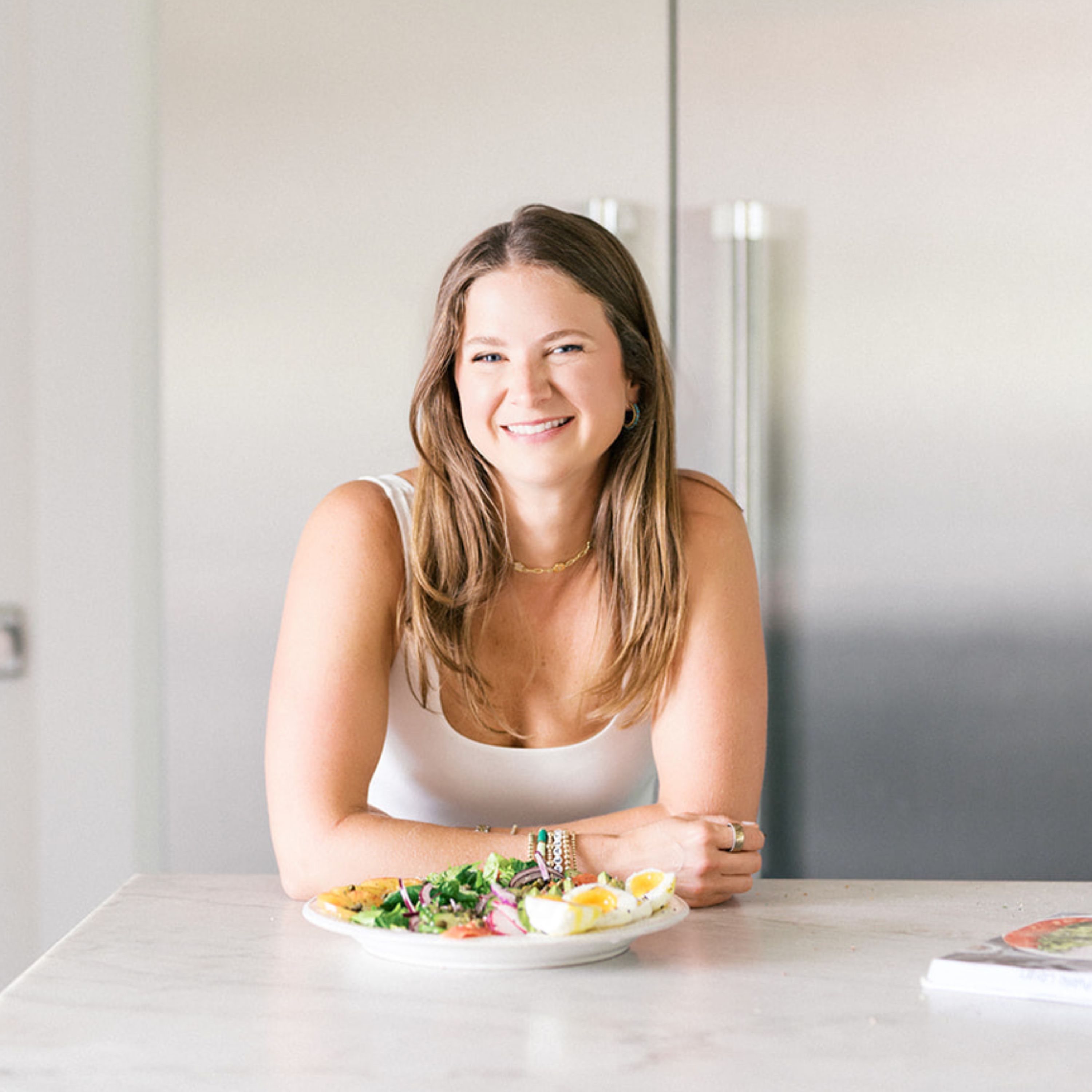
Functional Medicine Practitioner / Mom
Kathryn Becker is a functional medicine practitioner, former engineer, and mom of two who helps women lose stubborn weight and get their energy back using root-cause healing. After four years of helping hundreds of women 1:1 through her functional medicine practice, Kathryn realized she was still struggling with her own weight despite “doing everything right.” Earlier this year, she finally cracked the code - losing 20 pounds in 3 months without cardio, calorie counting, or medication, and keeping it off ever since. She went on to package what she learned into her signature 6-week program, Lean Energy, which has already helped more than 300 women lose an average of 16 pounds and sustain it through functional, hormone-focused methods. Kathryn is passionate about helping women understand their bodies, rebuild their confidence, and discover that true fat loss starts with healing - not restriction.




